Training and educating employees on cybersecurity (Security Awareness Trading)
Training and educating employees on cybersecurity (Security Awareness Trading)
I raise your team’s awareness … a program of training and awareness of employees on cybersecurity
Definition of the service
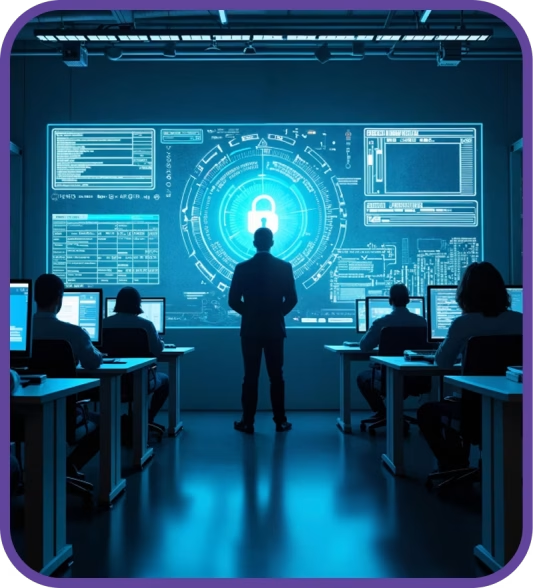
Security Training in the effect of the effect of cybersecurity is an integrated program that aims to build a firm security culture within your organization. The program includes interactive courses, workshops, and educational materials (videos, presentations, infographics), in addition to simulating e -client attacks (Phishing Simulation) and exercises and Sowcial exercises to enhance the ability of employees to identify cyber threats and respond immediately. The program adopts the Devsecops approach in cooperation with your information technology team to ensure the integration of security awareness within the process of developing daily services and operations.
Service benefits
Promoting a culture of safety within the organization
- Studies indicate that more than 90% of breaches are caused by human error, such as:
- Opening phishing emails
- Downloading malware
- Employee awareness training focuses on:
- Threat techniques such as ransomware and Business Email Compromise (BEC)
- Practical scenarios that demonstrate how to prevent breaches through proper behavior
- Employees learn to:
- Identify suspicious emails
- Verify links
- Handle sensitive information securely
- The result:
- Reduced security incident rates
- Reduced time to detect and respond
- Avoid emergency costs and operational risks.
Promoting a culture of safety within the organization
- The Security Awareness Training program aims to build a sustainable cybersecurity culture, not just impart information.
- The program includes:
- Interactive live sessions
- Weekly competitions
- Microlearning quizzes
- The training transforms employees from passive recipients to active partners in cyber defense.
- Learning modules include:
- Real-life stories of attacks such as SolarWinds and NotPetya
- Explanation of the psychological mechanisms of Social Engineering
- This approach enhances employee awareness and motivates them to share security practices with their colleagues.
- The result: a flexible and more resilient workplace that reflects the company’s vision and values.

Compliance with regulatory and legal standards
- Standards such as ISO 27001, GDPR, Saudi NCA, and PCI-DSS impose mandatory requirements for security training for employees.
- The training program ensures compliance with the cybersecurity training clause of Annex A of ISO 27001, and is aligned with the GDPR awareness and user rights provisions.
- Provides:
- Accredited certificates of attendance for each participant.
- Detailed reports including attendance rates and exam pass levels.
- These reports facilitate demonstrating compliance to accreditation bodies or government oversight bodies.
- Result: Avoid fines and preserve the organization’s legal and operational reputation.
Early detection of phishing attempts and cyber attacks
- Phishing simulations are conducted, tailored to the business sector (finance, medical, government).
- The simulation aims to test employee responses in a secure environment.
- Fake messages are sent that mimic real attacks, with results tracked via an interactive dashboard showing:
- Number of clicks
- Amount of data entered by employees
- After each exercise, an analysis session is held to explain common mistakes and provide immediate tips for improving awareness.
- This integration of theoretical awareness and practical tests leads to:
- Increased learning rates
- A tangible improvement in the team’s response to real threats.

Improve the company's reputation and increase customer confidence
- Developing an integrated security awareness program sends a clear cultural message: “We care about your data and your security.”
- Interactive dashboards and awareness reports can be used in tenders and project proposals to enhance credibility and trust.
- This positively impacts the confidence of customers and financial partners.
- The program contributes to obtaining security certifications such as:
- Cyber Essentials
- SOC 2 Type II
- Documenting team achievements in performance reports and internal newsletters:
- Boosts morale.
- Motivates the technical department to introduce new security initiatives.
Raising the team's level of readiness to respond to security incidents
- It’s not enough to simply identify threats; actual response skills must be built.
- The training includes practical modules on Incident Response Playbooks, teaching employees how to:
- Report incidents immediately
- Use company tools to detect malware
- Perform initial containment steps
- Escalate to the SOC or IRT team
- Tabletop exercises are conducted, bringing together IT teams and senior management.
- The exercises aim to:
- Clarify roles and responsibilities
- Improve the speed of response to cyber incidents
- Significantly reduce mean time to recovery.
Reducing the risk of attacks caused by human error
Studies indicate that more than 90% of hackers start with a human error – open a phishing message or download a malware. By training employee awareness, we highlight the most prominent threat methods such as Ransomware and Business Email Compromise (bec), and we provide practical scenarios show how proper behavior can prevent the penetration of systems. Employees acquire suspicious messages skills, verify links, and deal with sensitive information safely. This is reflected directly in reducing security incidents and reducing the time to respond (Time to Detect & Respond), which means avoiding emergency response bills and operational risks.
Enhancing a culture of safety within the institution
Security Awarding Training is not limited to the transfer of information, but is a continuous effort to build an electronic safety culture. Through live sessions, weekly competitions, and short tests (Microlearning Quizes), training transforms employees from negative recipients into effective partners in cybersecurity. Educational units include realistic stories about famous attacks such as Solarwinds and Notpetya, and discusses the psychological mechanisms used in Social Engineering, which enhances awareness and motivates employees to share safety practices with their colleagues. This comprehensive approach reflects the security association with the company’s vision and values, and leads to a more flexible work environment and ability to face digital challenges.
Compliance with regulatory and legal standards
Standards such as ISO 27001, GDPR, Saudi NCA and PCI-DSS are explicit requirements for employee security training. Our program guarantees the cybersecurity training clause within annex A in ISO 27001 and is compatible with the GDPR and user rights. We provide certified certificates for each participant and detailed reports that explain the attendance rates and levels of success in the tests, which makes it easier for you to prove the consensus in front of the accredits or governmental supervisory authorities. Thanks to this, you avoid fines and maintain your legal and operational reputation.
Early detection of attempts to hunt and electronic attacks
The phishing simulation attack is designed according to your business sector – whether financial, medical, or government – employees ’response is tested in a safe environment. We send fake messages that mimic real attacks, while tracking the results on an interactive dashboard (Dashboard) that display the number of clicks and data entered by employees. Each exercise is followed by an analytical session explaining common mistakes and providing immediate advice to enhance awareness. This integration between theoretical awareness and practical tests raises learning rates and ensures a tangible improvement in your team’s response to real threats.
Raise the level of the team's readiness to respond to security incidents
It is not enough to get to know the threat, but the response skills must be built. Training includes practical units on Incident Response Playbooks and Employee Education How:
Incident Reporting immediate reporting
Using the company tools to detect malware
Implementation of the initial closure steps (Containment Steps)
The escalation of the SOC or IRT team is conducted by Tabletop Exercises that bring together IT and senior management teams, ensuring clarity of roles and the speed of dealing with any cyber event, and significantly reduces the time of recovery.
Improving the Foundation's reputation and increasing confidence in customers
A company that develops an integrated security awareness program that sends a clear cultural message: “We care about your data and security.” Interactive dashboard and awareness reports can be used in tenders and projects to enhance credibility. This is reflected positively on customer and financial partners’ confidence, and contributes to obtaining safety certificates such as Cyber Essentials and SOC 2 Type II. Clearing your team’s achievements in performance reports and messages of the internal bulletin raises the morale, and stimulates the technical section to provide new security initiatives.
When do you need it?
After discovering a security breach or a rise in SIEM/IDS warnings.
Before and after major structural changes such as integrating companies or deporting the cloud.
Upon starting the company or launching a new service to ensure that behaviors are secured from the first day.
To stimulate a sustainable safety culture through quarterly or semi -annual sessions renewed knowledge and support continuous learning.
When adopting a remote work policies to secure the weak points associated with remote access.
As part of the periodic compliance program for ISO 27001, GDPR, PCI-DSS, and NCA.
After discovering a security breach or a rise in SIEM/IDS warnings.
Before and after major structural changes such as integrating companies or deporting the cloud.
Upon starting the company or launching a new service to ensure that behaviors are secured from the first day.
To stimulate a sustainable safety culture through quarterly or semi -annual sessions renewed knowledge and support continuous learning.
When adopting a remote work policies to secure the weak points associated with remote access.
As part of the periodic compliance program for ISO 27001, GDPR, PCI-DSS, and NCA.
What does the service include?
What does the service include?
Evaluating the current level of awareness through questionnaires and interviews with employees.
Developing dedicated content that is appropriate for your organization's culture and business sector.
Interactive workshops and online courses include short videos and practical exercises.
Simulating hunting and social engineering attacks with detailed reports for each exercise.
Dashboard's performance dashboard displays KPI performance indicators.
Periodic review sessions to update content based on the latest threats and organizational changes.
Work methods / steps
Work methods / steps
Preparing and collecting information
Interview information and human resources technology teams to determine goals and training scope.
Baseline Assessment
A questionnaire to measure the current security awareness level and the previous accident record.
Carrying curriculum design
Preparing interactive training units covering hunting, social engineering, data protection.
Implementation (Delivery)
Holding attendance workshops and online, and sending interactive content via e -learning platforms.
Hunting simulation simulation
Send fake hunting campaigns and measure employee response, with immediate instructions.
Measurement and improvement
Results analysis, submit a closing report, and update the awareness plan for a later course.
Common questions
The courses range from 4-8 sessions distributed over 4-6 weeks, with short motivational sessions between the courses.
Yes, examples and scenarios are designed according to your business type and your threat environment.
Via KPI indicators such as clicking on fictitious hunting messages and the rate of correct answers in short tests.
We offer hybrid solutions: attendance workshops and interactive online courses (Webinars, LMS).
It varies according to the number of employees and the duration of the program, and our packages start from 8,000 Saudi riyals for small companies.
It is recommended to update the courses and simulate hunting quarterly to maintain security vigilance and reduce the risk environment.
No; We use cloud platforms and electronic gates to connect the content and record results without the need to install programs.
We follow Threat Intelligence updates and talk periodically to cover the latest methods such as Deepfake Phishing and Ransomware-AS-ARARVICE.
Raise the vigilance of your cyber team today
Raise the vigilance of your cyber team today